Who Cleopatra was before the legend
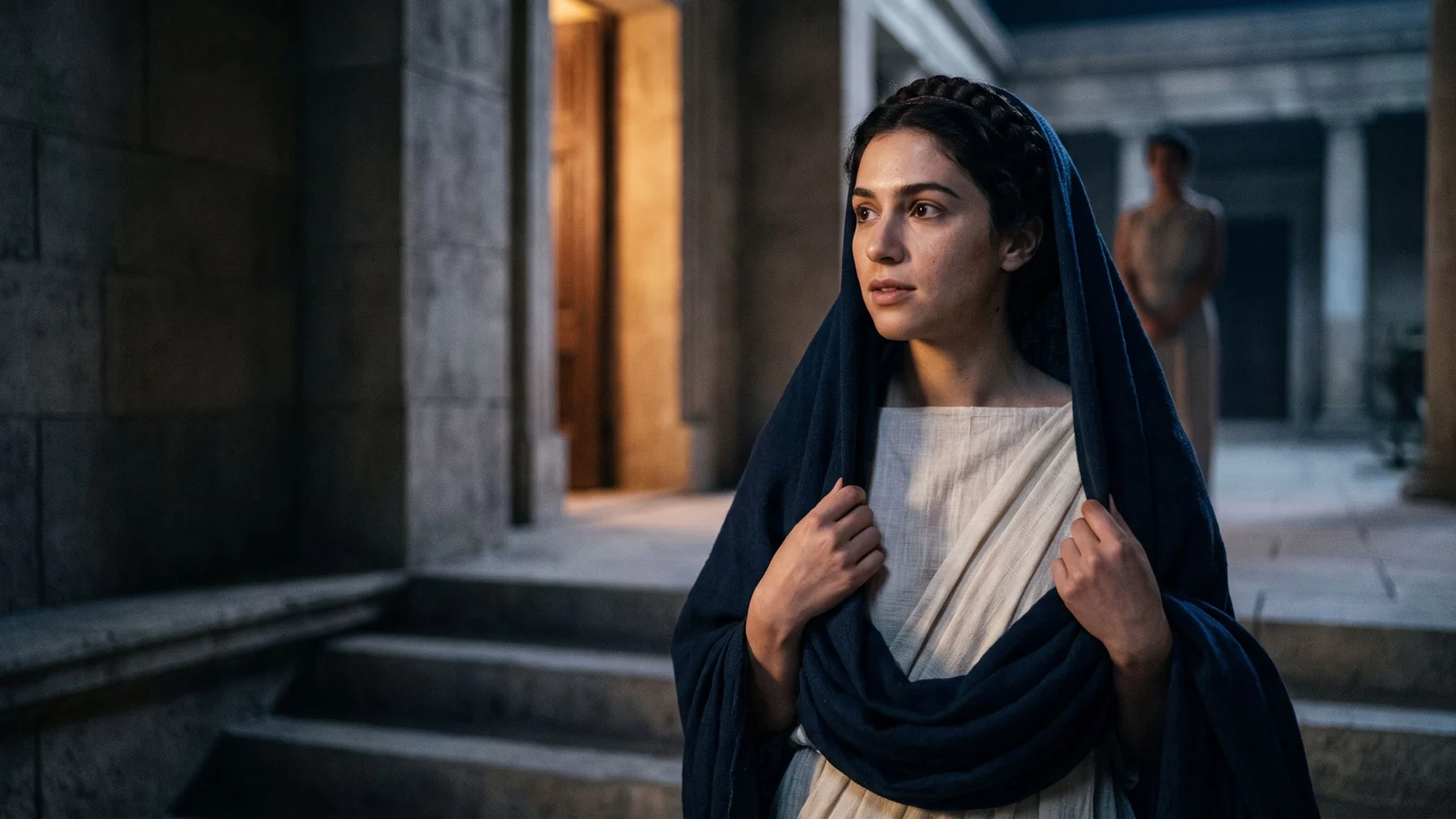
Cleopatra was the last effective ruler of the Ptolemaic dynasty, the Macedonian Greek house that had governed Egypt since Alexander’s successors. Plutarch describes her voice, intelligence and command of many languages; he reports that unlike her predecessors she learned Egyptian. Her power rested on administration, religion and diplomacy in a wealthy kingdom caught between independence and Roman supervision, not on the seductress caricature that later Roman writers and modern retellings preferred.
The exile and the return to Alexandria
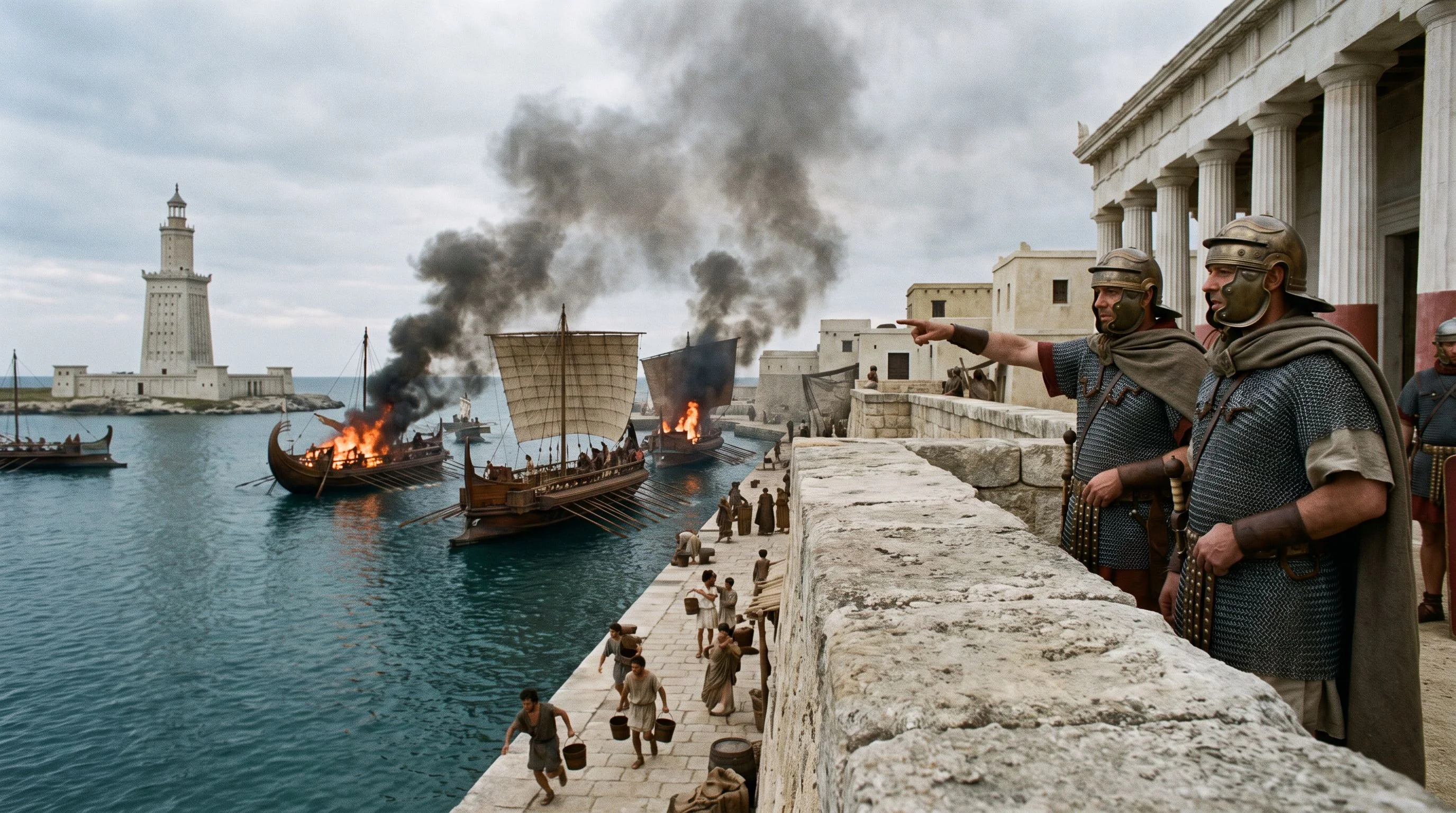
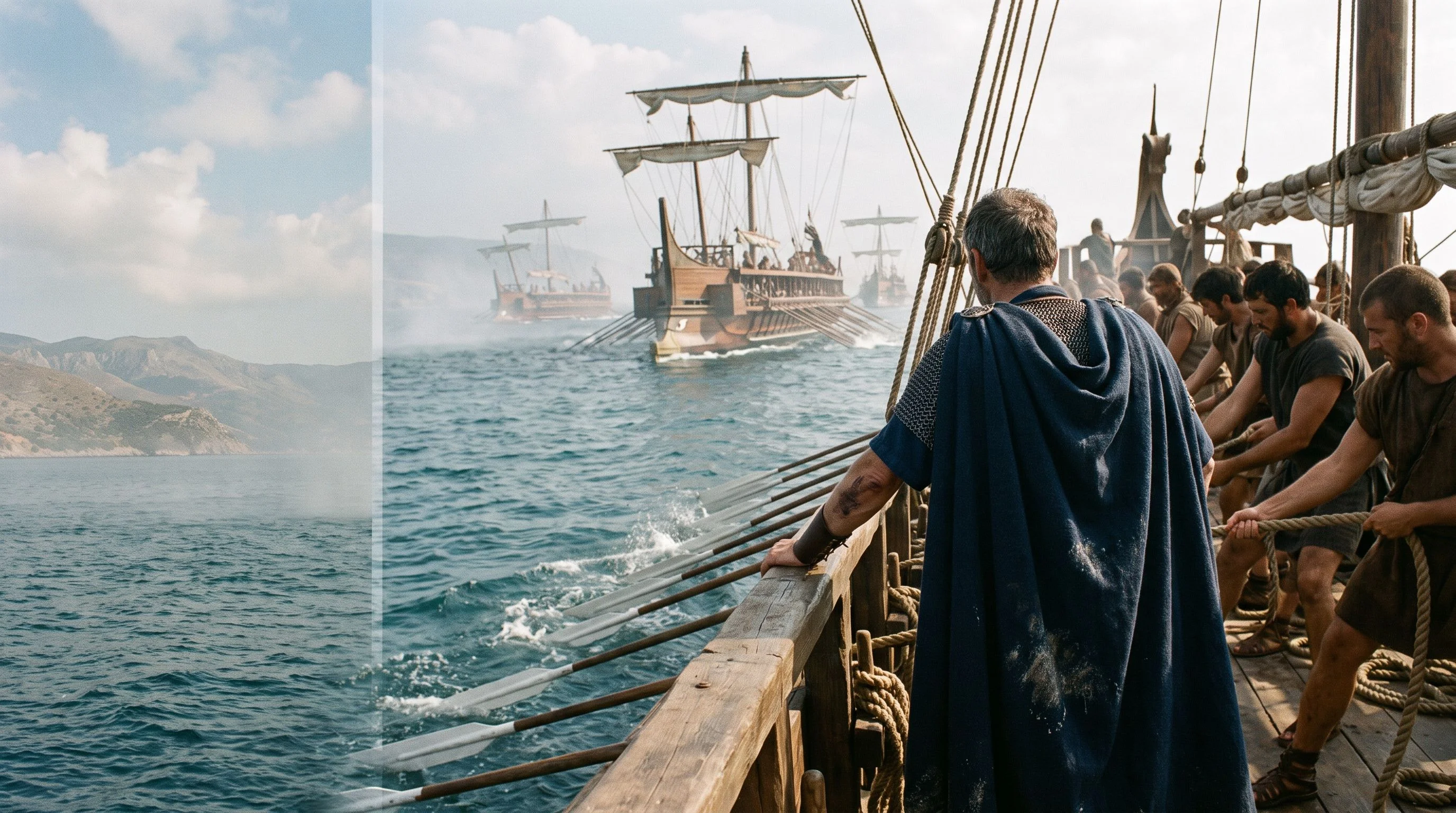
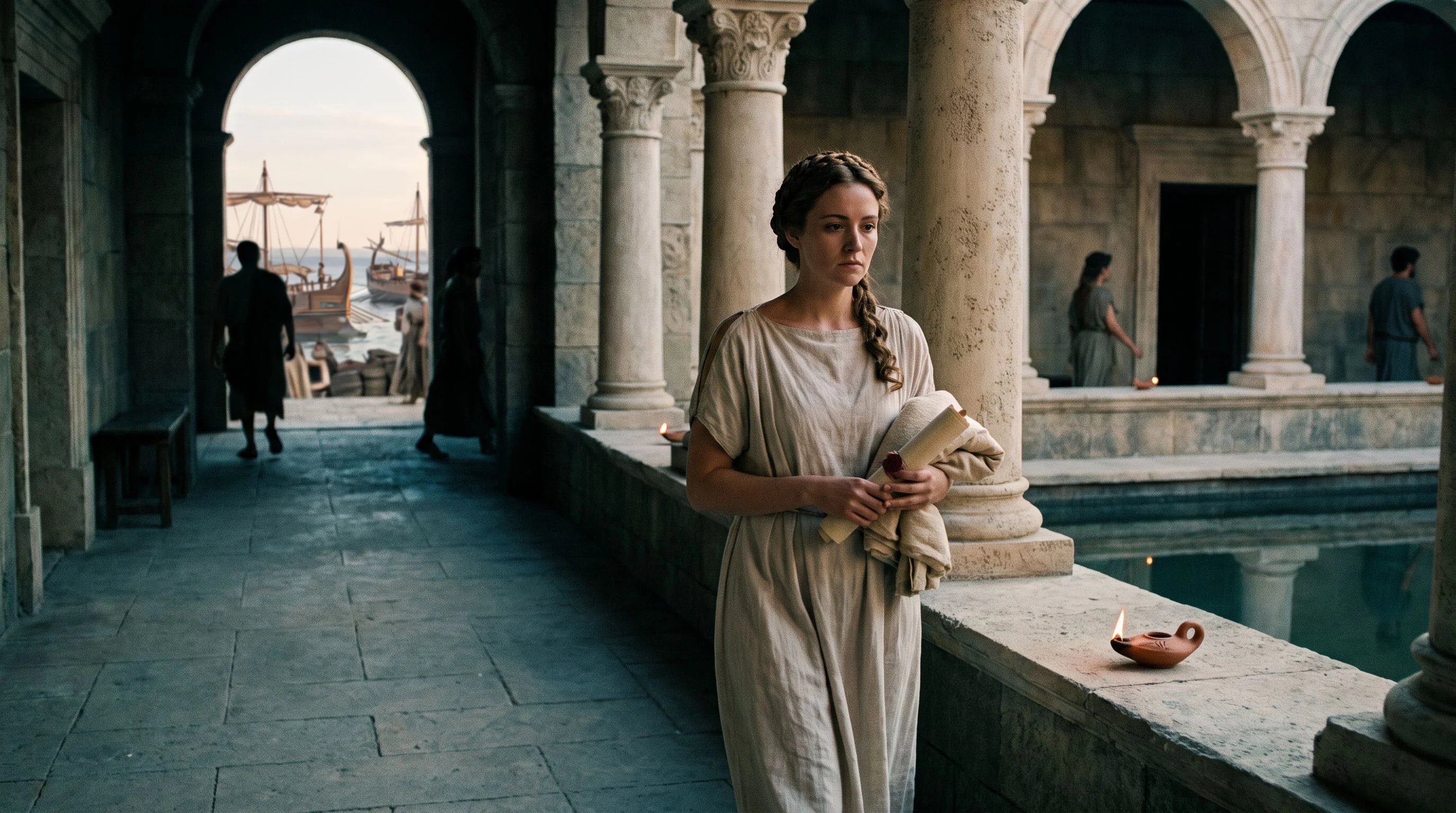
Sidelined and then driven from Alexandria by her brother’s ministers, Cleopatra gathered forces near the frontier while Caesar, pursuing the defeated Pompey, occupied the palace quarter. Plutarch tells the famous story of her being smuggled to Caesar concealed in bedding; Cassius Dio has her arrive by arrangement. Both write generations later, and the exact manner of the meeting cannot be established. What followed is secure: Caesar backed her claim, war with Ptolemy XIII’s faction followed, and she emerged as queen.
Questions people ask
Was Cleopatra Egyptian or Greek?
She belonged to the Ptolemaic dynasty, of Macedonian Greek descent, ruling Egypt from Alexandria. Ancient testimony that she spoke Egyptian, unusually for her house, reflects a deliberate engagement with the kingdom she governed.
Did Cleopatra really meet Caesar hidden in a carpet?
Plutarch, writing about 150 years later, says she was carried to Caesar concealed in a bedding sack; the rolled carpet is a still later embellishment. It is a memorable tradition, not a verifiable event.
Step into Cleopatra
Driven from Alexandria by her brother’s court, return in secret to reach Caesar before the palace closes every door. Decide whom to trust, how to enter unseen, and how to make Rome listen.
This episode is a planned playable documentary. You can explore its narrated opening and make one decision now. The three acts below describe the full story in development. Once completed, it will be free for everyone.
- Exile on the Syrian frontier
- Into the palace unseen
- An audience with Rome
Sources and perspective
Ancient accounts reflect their authors’ positions and often disagree. These sources inform the historical summary; dialogue, player roles and imagery in the documentary may be dramatized.
- Plutarch · Life of Caesar 48–49
The smuggled entrance and Caesar’s intervention in the dynastic dispute, written well over a century later.
- Plutarch · Life of Antony 25–27
The celebrated description of Cleopatra’s conversation, voice and languages.
- Cassius Dio · Roman History 42.34–35
A later alternative account of her return and first meeting with Caesar.
An original historical guide by The Age of Rome. Updated 14 September 2026.