From Caesar’s heir to victory at Actium and Alexandria
After Caesar’s assassination in 44 BC, Octavian asserted his position as the dictator’s adopted heir. He cooperated with Antony and Lepidus before the alliances of the civil wars fractured. In 31 BC his side defeated Antony and Cleopatra at Actium, with Agrippa playing a major military role. The following year Octavian took Alexandria. Antony and Cleopatra died, and Egypt came under Roman control. The military and human stories of those final confrontations have their own episodes; this chapter asks what Octavian did with the power they left him.
The settlement of 27 BC
In his Res Gestae, Augustus presents himself as returning the state to the Senate and Roman people in his sixth and seventh consulships, 28 and 27 BC. He records the award of the name Augustus and emphasizes his standing rather than an openly superior office. That is his own retrospective presentation. Cassius Dio, writing much later, explains the division of provincial responsibilities and the enduring concentration of power. The settlement left ordinary magistracies in place while Augustus held an exceptional command and position. Further adjustments followed, so 27 BC should be understood as a major stage in the formation of the principate rather than its entire constitutional history.
Questions people ask
Are Octavian and Augustus the same person?
Yes. Octavian is the conventional name used for Caesar’s heir before the Senate awarded him the title Augustus in 27 BC.
Did defeating Antony and Cleopatra immediately make him emperor?
The victories made him dominant, but the political order developed through settlements and accumulated powers. The settlement of 27 BC conventionally marks the beginning of his rule as Rome’s first emperor.
Step into Augustus: Rome’s First Emperor
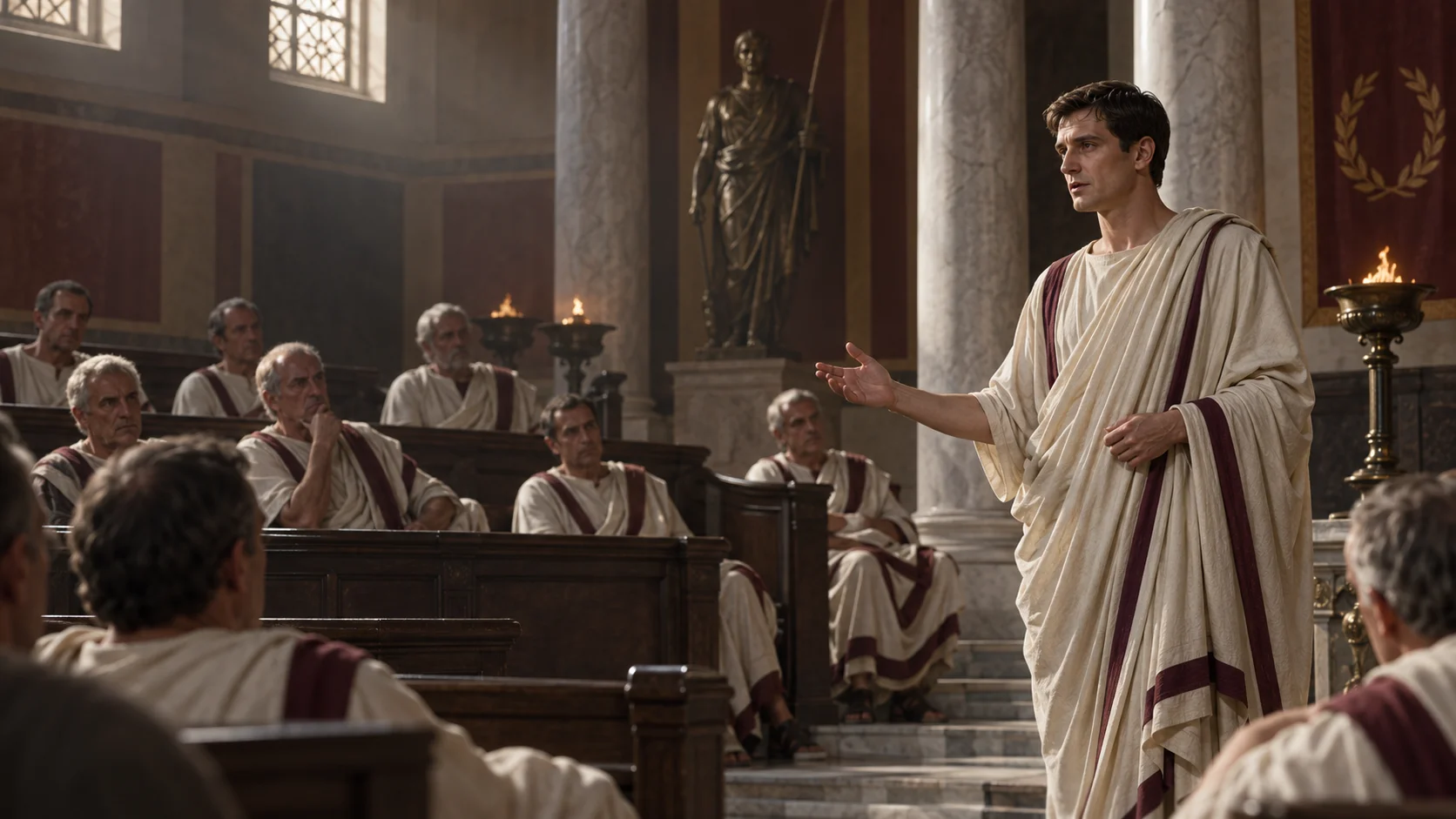
Antony and Cleopatra are defeated. You hold the armies, but what should Rome call your power? Enter the Senate as Octavian and shape the settlement that will give you the name Augustus.
This episode is a planned playable documentary. You can explore its narrated opening and make one decision now. The three acts below describe the full story in development. Once completed, it will be free for everyone.
- Victory comes home
- Power before the Senate
- The name Augustus
Sources and perspective
Ancient accounts reflect their authors’ positions and often disagree. These sources inform the historical summary; dialogue, player roles and imagery in the documentary may be dramatized.
- Suetonius · Augustus 9–17
A later account of the civil wars, Actium, and the capture of Alexandria.
- Augustus · Res Gestae 34
Augustus’s own retrospective claim about restoring the state and receiving his new name.
- Cassius Dio · Roman History 53.12–17
A later interpretation of the provincial settlement and personal rule beneath republican institutions.
An original historical guide by The Age of Rome. Updated 14 September 2026.