War, negotiation and the rain miracle
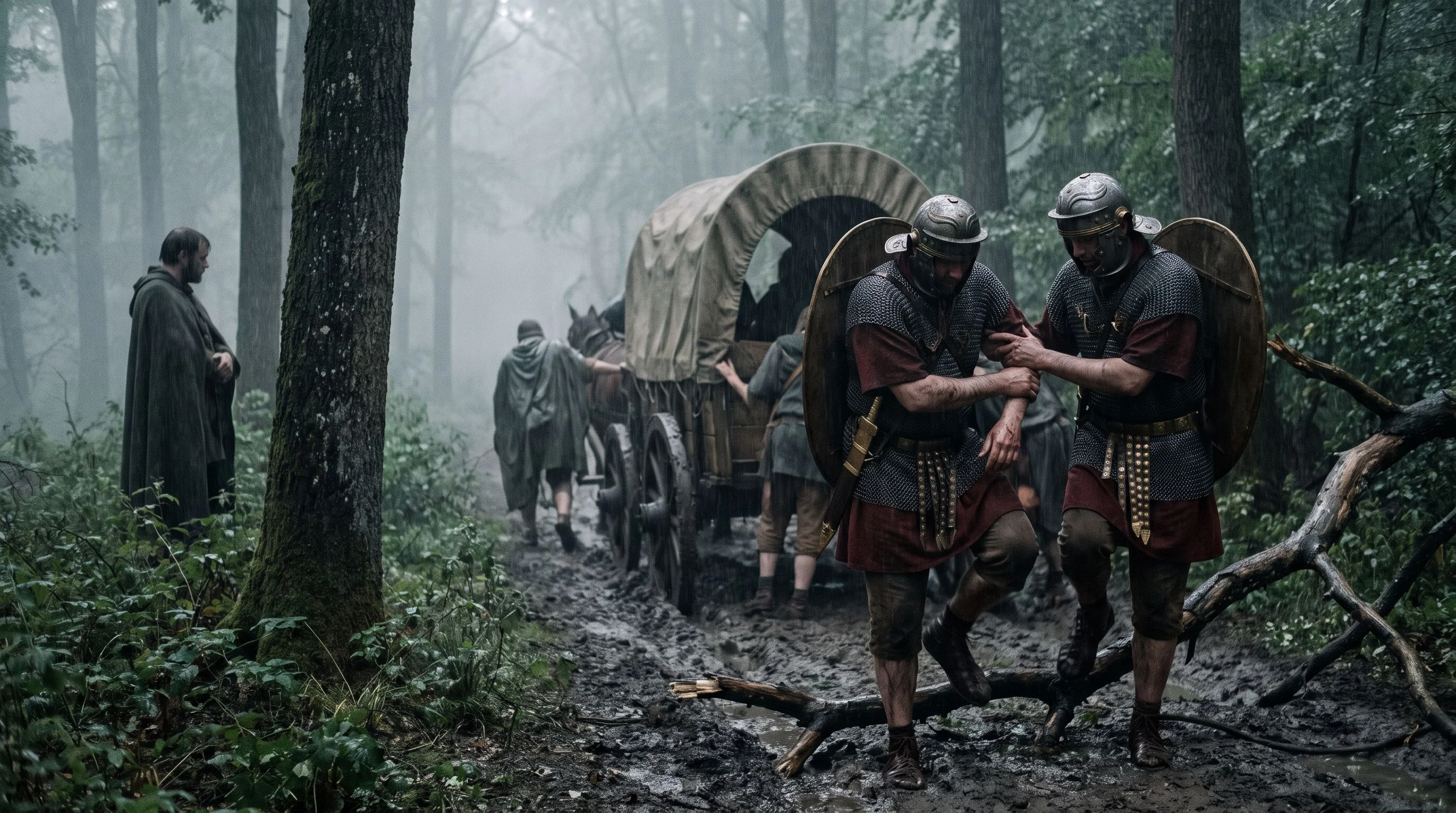
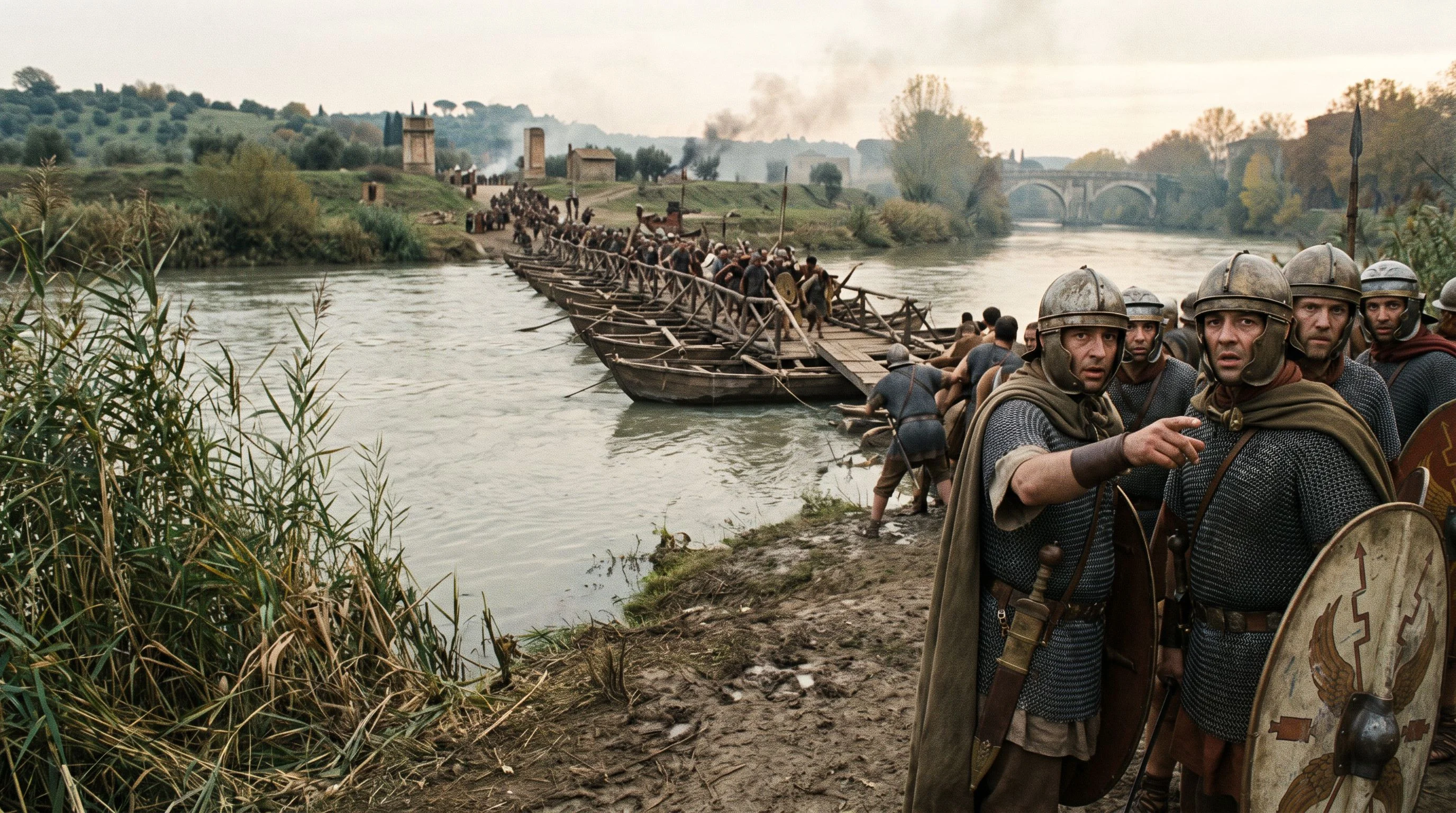
The frontier wars involved invasions, Roman counterattacks and negotiated settlements. Cassius Dio describes demands for captives, hostages and restrictions on movement and trade. His account survives here through later excerpts. It also preserves a story of rain relieving an endangered Roman force; the medieval compiler Xiphilinus adds a competing Christian explanation. The storm’s religious meaning belongs to the history of these interpretations, rather than an independently verified miracle.
The Meditations and the responsibilities of power
Written in Greek, the Meditations are generally understood as exercises for Marcus’s own moral improvement. The transmitted text includes location notes associating writing with the Quadi’s territory and Carnuntum. These support a campaign setting, without dating every passage or establishing the work’s original arrangement. Its advice about duty and mortality should be read beside the responsibilities of a ruler whose son Commodus became co-emperor in AD 177, before Marcus died in 180.
Questions people ask
Were the Meditations written at Carnuntum?
A location note in the surviving textual tradition names Carnuntum; another names the river Gran in Quadi territory. These connect some writing with the northern campaigns, but do not prove the whole work was composed there or establish its early circulation.
Was Marcus Aurelius murdered by Commodus?
The film scene of Commodus killing his father is not an established historical event. Ancient accounts differ: the Historia Augusta describes illness, while Dio reports hearsay implicating physicians acting to favour Commodus. Marcus died in AD 180; the exact cause remains uncertain.
Step into Marcus Aurelius: The Philosopher Emperor
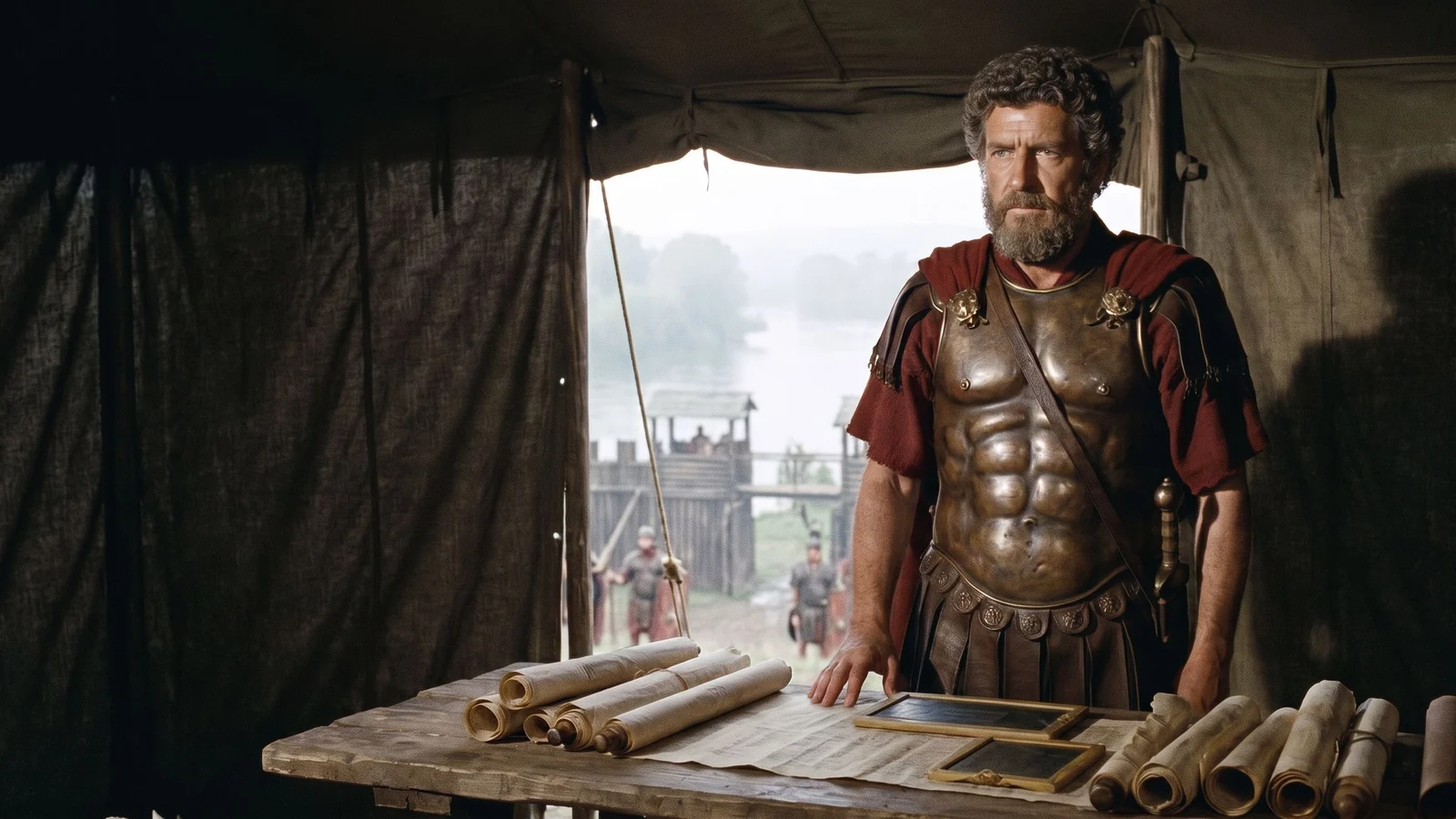
At Carnuntum, reports and envoys bring the northern war to your command tent. Choose where to reinforce the line, weigh the terms of a settlement, and reflect on the responsibilities of power through Marcus’s own words.
This episode is a planned playable documentary. You can explore its narrated opening and make one decision now. The three acts below describe the full story in development. Once completed, it will be free for everyone.
- Reports from the frontier
- The terms of peace
- Notes to himself
Sources and perspective
Ancient accounts reflect their authors’ positions and often disagree. These sources inform the historical summary; dialogue, player roles and imagery in the documentary may be dramatized.
- Römerstadt Carnuntum · Marcus Aurelius at Carnuntum
The archaeological site’s account of the frontier base and wider plague context; individual mission encounters are dramatized.
- Cassius Dio · Roman History 72.8–10, 15–16
The rain narrative and frontier terms. Xiphilinus’s Christian explanation is distinguishable from Dio’s account; some editions number this Book 71.
- Marcus Aurelius · Meditations, Book 2
Farquharson’s translation includes the location note about the Quadi and river Gran, followed by exercises on conduct and duty.
- Marcus Aurelius · Meditations, Book 3
This edition places the Carnuntum note before Book 3; it is evidence from the transmitted text, not a surviving autograph notebook.
- Stanford Encyclopedia of Philosophy · The character of the Meditations
Scholarly discussion of self-directed philosophical practice, textual organization and the work’s uncertain early reception.
- Cassius Dio · Roman History 72.33–34
Dio explicitly introduces the allegation about Marcus’s physicians as something he was told.
- Historia Augusta · Marcus Aurelius 28
A later biography describes a final illness. Its account does not securely establish a modern diagnosis.
- British Museum · Commodus
The chronology distinguishes joint rule from AD 177 from sole rule after Marcus’s death in 180.
An original historical guide by The Age of Rome. Updated 14 September 2026.