Why did Hannibal cross the Alps instead of sailing to Italy?
Hannibal’s aim was to fight Rome in Italy with Italian help. Polybius says he had inquired carefully about the fertile land below the Alps, its large population and the hostility of the Gauls of the Po valley towards Rome, and had sent envoys to their leaders. When they reported that the crossing was hard but not impossible, he set out. The timing seemed promising: as news of his march spread, the Boii and Insubres rose against Rome’s new colonies at Placentia and Cremona.
Polybius does not describe a choice between land and sea, but his narrative shows why the sea was unattractive. One Roman consul sailed for Spain with sixty ships while the other gathered 160 warships in Sicily for an attack on Africa. Carthage had also lost Sicily and Sardinia after the First Punic War. Modern historians usually add that shipping tens of thousands of men, horses and elephants past Roman fleets, without friendly harbours on the way, would have been extremely risky. The land route also surprised Rome: Publius Scipio had not believed Hannibal would attempt it.
Evidence: Polybius · Histories 3.33–60
What route did Hannibal take, and how did his elephants cross the Rhône?
Hannibal set out in spring 218 BC from New Carthage, modern Cartagena, which Polybius reckons was about nine thousand stades, well over 1,500 kilometres, from the plain of the Po. North of the Ebro he fought his way through several peoples to the Pyrenees, left an officer named Hanno with 10,000 infantry and 1,000 cavalry to hold the region, and sent a similar number home. He then crossed the Pyrenees and marched through southern Gaul, bribing some communities and forcing others to let him pass, until he reached the Rhône about four days’ march from the sea.
Gauls gathered on the far bank to stop him. Hannibal sent a detachment upstream to cross on rafts and attack them from behind, then ferried the army over in boats and canoes, with horses swimming behind. For the 37 elephants, Polybius describes a pier of lashed rafts covered with earth to look like a path, with two females leading. The last rafts were cut loose and towed across. Some frightened animals plunged into the river; their drivers drowned, but the elephants reached the bank. Livy reports a second story, of a provoked elephant chasing its driver into the river with the herd behind it, but he too prefers the rafts.
Evidence: Polybius · Histories 3.33–60 · Livy · History of Rome 21.28
Who attacked Hannibal’s army in the Alps?
Before the mountains, Hannibal reached a fertile district Polybius calls the “Island”, where the Rhône meets another river, usually identified as the Isère. He helped one of two rival brothers win power there, and in return received food, new weapons, warm clothing and footwear, and an escort through the territory of the Allobroges. Once that escort turned back, Allobrogian leaders occupied the heights above the road. Learning that they left their posts at night, Hannibal seized them in darkness, but the fighting that followed sent many horses and pack animals over the precipices before he captured the town the attackers came from.
A few days later, other mountain communities approached with olive branches and wreaths, offered hostages and acted as guides. Two days on, they attacked in a narrow gorge, rolling and throwing stones from above. Hannibal had placed his baggage and cavalry in front and his heavy infantry behind, which limited the damage, but he spent a night separated from part of his army. Polybius says the elephants helped: attackers avoided that part of the column because the animals looked so strange to them. He also insists the Alps were inhabited and had been crossed by Gallic armies before, not an empty wilderness.
Evidence: Polybius · Histories 3.33–60
How long did it take Hannibal to cross the Alps?
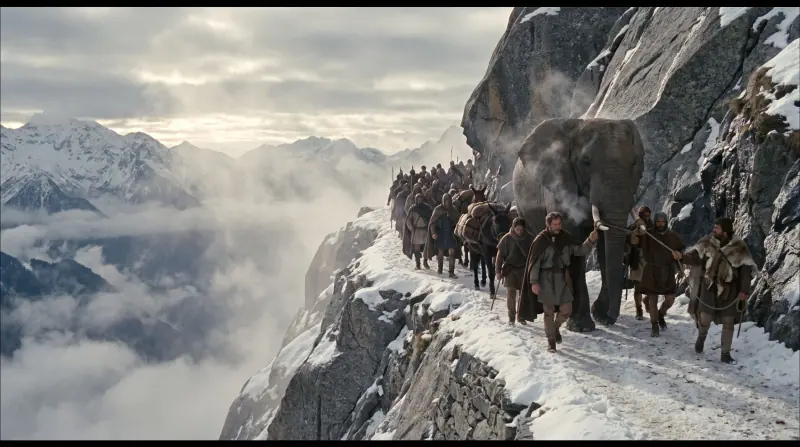
Polybius says Hannibal reached the summit after nine days of climbing and camped there for two days to rest the army and wait for stragglers; some lost horses and pack animals found their way back along the track. It was close to the setting of the Pleiades, a seasonal marker that points to the autumn, and snow was already lying on the summit. To revive the soldiers, Hannibal showed them the plain of the Po below. Livy tells a similar story, though he places the view of Italy at the start of the descent rather than at the camp.
Polybius gives fifteen days for the whole Alpine crossing and five months for the march from New Carthage; Livy repeats the same figures from “some authorities”. The two accounts are close enough that they probably draw on a shared early source, and the Livius.org reconstruction sets out a day-by-day sequence. Polybius carries particular weight because he says he questioned men who were there and crossed the Alps himself to see the country. Even so, no calendar dates survive for the crossing; the late October or early November often quoted is a modern deduction.
Evidence: Polybius · Histories 3.33–60 · Livy · History of Rome 21.35–38 · Livius.org · Hannibal in the Alps
The blocked descent: did Hannibal split rock with fire and vinegar?
The descent was nearly as costly as the climb. Polybius says the path was narrow and steep, and in the snow men and animals that strayed from it fell. Then the army reached a stretch where an old landslip, enlarged by a recent one, had carried the path away. An attempted detour failed: fresh snow lay over hard old snow, so men slid and pack animals broke through and stuck. Hannibal camped on the ridge, had the snow cleared and set soldiers to rebuild the path. Horses and pack animals got through after a day; the starving elephants needed three days of work by Numidians in relays.
Livy adds the famous detail. He says soldiers felled trees, piled them against a rock and set them alight, then poured vinegar on the hot stone to break it before cutting a zigzag path with tools. Heating and then cooling rock to crack it was a known ancient technique, so the story is not impossible. But Livy wrote under Augustus, almost two centuries later. Polybius, who says he crossed the Alps to study the route, describes rebuilding the path without fire or vinegar and says the heights near the passes were treeless. The episode is best treated as a later tradition that cannot be confirmed.
Evidence: Polybius · Histories 3.33–60 · Livy · History of Rome 21.35–38
How many men, horses and elephants survived the crossing?
Polybius’s figures shrink at each stage. He says Hannibal crossed the Ebro with about 90,000 infantry and 12,000 cavalry, advanced through the Pyrenees with 50,000 and about 9,000, and set out from the Rhône with 38,000 infantry and more than 8,000 cavalry. In Italy he had 12,000 African and 8,000 Iberian infantry and no more than 6,000 cavalry. Those final numbers come from a bronze inscription Hannibal set up on the Lacinian promontory in southern Italy, which Polybius says he read. Polybius reckons that the Alps cost about half the army, and far more horses and pack animals.
The earlier figures are less secure than the final count, and Polybius does not explain every fall between them. Livy notes that ancient writers disagreed widely, from 100,000 infantry and 20,000 cavalry down to 20,000 and 6,000. He cites the Roman Lucius Cincius Alimentus, once Hannibal’s prisoner, as hearing Hannibal say he lost 36,000 men after the Rhône. Polybius gives 37 elephants at the Rhône but no count of those that survived the mountains. Elephants fought at the Trebia, after which cold weather killed all but one; Hannibal rode that last animal through flooded marshland in 217 BC.
Evidence: Polybius · Histories 3.33–60 · Polybius · Histories 3.61–85 · Livy · History of Rome 21.35–38
Which pass did Hannibal use?
Nobody knows for certain, and the argument is ancient. Livy rejected the common view that Hannibal crossed the Poenine Alps, around the Great St Bernard, because his army came down among the Taurini near modern Turin. Modern candidates include the Little St Bernard, Mont Cenis, Col du Clapier, Montgenèvre, Col de la Croix and Col de la Traversette, with advocates from Napoleon and Mommsen onwards. Each is tested against the texts: room for a summit camp, a view of Italy, old snow on a narrow, steep first descent and about three days to the plain. No candidate fits every detail comfortably.
In 2016 a team led by Bill Mahaney published evidence in the journal Archaeometry from a mire below the Col de la Traversette. They reported a churned layer rich in bacteria typical of horse dung, radiocarbon dated to around 200 BC, and argued that it marked the passage of a great many animals. The authors said more genetic work was needed. Critics such as the Stanford historian Patrick Hunt, who favours a route by the Col du Clapier, replied that the Traversette has no room for a summit camp, that rockfalls are common in the Alps and that horses have crossed these mountains for millennia. The question remains open.
Evidence: Livy · History of Rome 21.35–38 · Livius.org · Hannibal in the Alps · Chris Allen · Horse-dung bacteria and Hannibal’s route, The Conversation (2016) · EARTH Magazine · On the trail of Hannibal’s army and elephants in the Alps (2016)
What happened after Hannibal crossed the Alps?
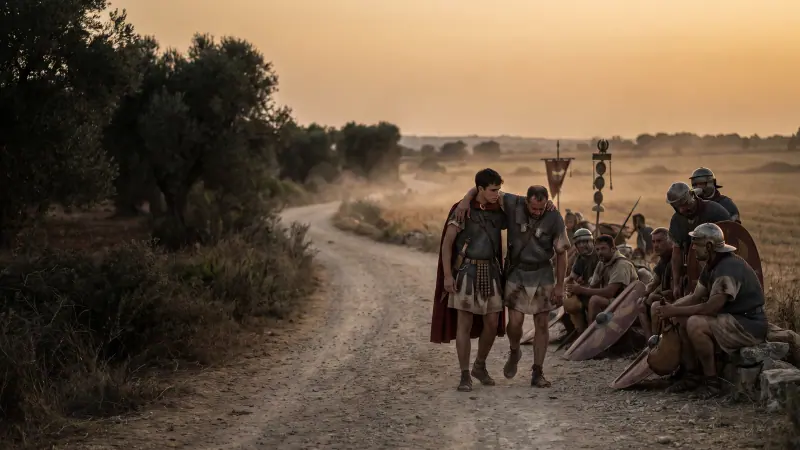
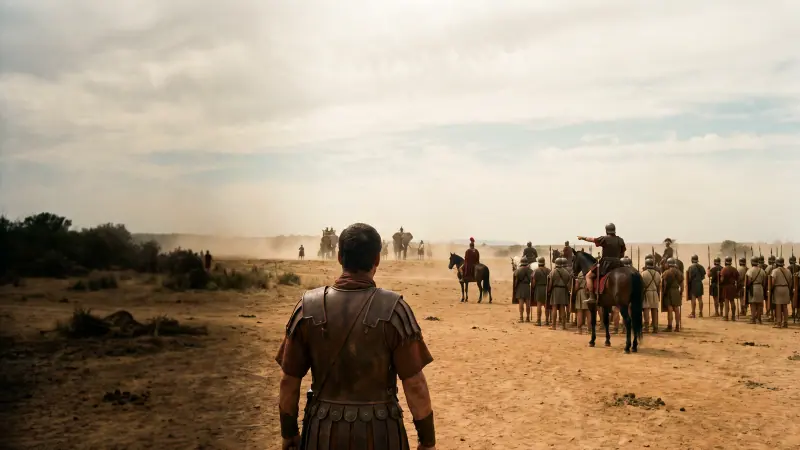
Hannibal first rested his exhausted army at the foot of the mountains, then took the chief town of the Taurini after a three-day siege, which frightened neighbouring communities into submission. Publius Scipio had sailed back to Italy and marched to meet him. In a cavalry battle near the Ticinus, Hannibal’s Numidian horsemen outflanked the Romans and Scipio was badly wounded. Around the winter solstice, the consul Tiberius Sempronius Longus led his army across the swollen Trebia on a freezing, snowy morning and was defeated by a frontal battle combined with an ambush from the rear. Many Gauls of the Po valley then joined Hannibal, as he had planned.
In 217 BC Hannibal crossed the Apennines and flooded marshland, then ambushed the consul Gaius Flaminius beside Lake Trasimene in morning mist; Flaminius was killed with much of his army. A year later came the Battle of Cannae in 216 BC, his most famous victory. Yet the invasion over the Alps did not break Rome’s alliances or end the war. Hannibal fought in Italy for years without capturing Rome, and the conflict was decided in Africa at the Battle of Zama in 202 BC. Half a century later, a third war ended with the destruction of Carthage in 146 BC.
Evidence: Polybius · Histories 3.33–60 · Polybius · Histories 3.61–85
Can you visit or hike Hannibal’s pass today?
There is no confirmed site to visit. Little or no archaeological evidence has been confirmed on any proposed route, so each candidate pass is a place to compare the landscape with the ancient texts, not a marked battlefield or monument. Three candidates, the Little St Bernard, Mont Cenis and Montgenèvre, carry modern roads. Others, including the Col du Clapier at about 2,480 metres and the Col de la Traversette at about 2,950 metres, are high mountain crossings reached on foot.
On the Italian side, trails from Pian del Re, near the source of the Po, lead towards the Colle delle Traversette, and the local tourist board describes the nearby Buco di Viso, a tunnel dated to 1480, centuries after Hannibal. Treat any of these crossings as a serious mountain walk: snow can linger into summer, weather changes quickly and access varies from year to year. Check current conditions with local tourist offices, park authorities or mountain guides before setting out.
Visit Cuneese · Upper Po valley, Monviso and the Colle delle TraversetteEvidence: Livius.org · Hannibal in the Alps · EARTH Magazine · On the trail of Hannibal’s army and elephants in the Alps (2016)
Timeline
- 219 BC
Hannibal captures Saguntum in Spain; Rome declares war on Carthage the following year.
- Spring 218 BC
Hannibal leaves New Carthage, crosses the Ebro and fights his way to the Pyrenees, leaving troops behind to hold the region.
- At the Rhône
The army forces a crossing about four days’ march from the sea; the elephants are ferried on earth-covered rafts. The consul Publius Scipio arrives three days too late.
- The ascent
Allobroges and other Alpine communities attack the column; Hannibal reaches the summit after nine days and rests there for two.
- The descent
Snow and a broken path halt the army until soldiers rebuild it; three more days bring it to the plain, fifteen days after the climb began.
- Late 218 BC
Hannibal defeats Roman cavalry near the Ticinus and the consul Sempronius at the Trebia around the winter solstice.
- 217–216 BC
Hannibal destroys a Roman army at Lake Trasimene and wins his greatest victory at Cannae.
Questions people ask
Why did Hannibal cross the Alps instead of going by sea?
Polybius says Hannibal wanted to reach the Gauls of the Po valley, who were hostile to Rome, and fight alongside them. Rome had powerful fleets, and Carthage had lost Sicily and Sardinia after the First Punic War, so a seaborne invasion with horses and elephants would have been very risky.
When did Hannibal cross the Alps?
In 218 BC, the first year of the Second Punic War. Polybius places the army at the summit near the setting of the Pleiades, with snow already lying, which points to the autumn. The exact days are not recorded.
How long did it take Hannibal to cross the Alps?
Polybius says fifteen days: nine days climbing, two days resting at the summit and a snowbound descent slowed by a broken path. The whole march from New Carthage took about five months.
How many elephants did Hannibal take over the Alps?
Polybius says Hannibal had 37 elephants when he crossed the Rhône. No ancient source gives a reliable count of those that survived the mountains, but elephants fought at the Trebia late in 218 BC; afterwards all but one died in the cold.
How did Hannibal get his elephants across the Rhône?
According to Polybius, his men built a long pier of rafts covered with earth so that it looked like solid ground. Led by two females, the elephants walked onto the end rafts, which were cut loose and towed across. Some panicked and jumped into the river, but reached the far bank.
How many soldiers did Hannibal lose crossing the Alps?
Polybius says about half his army. He records 38,000 infantry and more than 8,000 cavalry leaving the Rhône, and, from Hannibal’s own inscription, about 20,000 infantry and 6,000 cavalry reaching Italy. These are ancient figures, and other writers gave very different totals.
Which pass did Hannibal use to cross the Alps?
It is not known. Candidates include the Col de la Traversette, Col du Clapier, Mont Cenis, Montgenèvre and Little St Bernard. A 2016 study of ancient dung below the Traversette attracted wide attention, but critics argue that it does not prove Hannibal’s army was there.
Did Hannibal really break rocks with fire and vinegar?
The story comes from Livy, writing nearly two centuries later. Polybius, the earlier and better-informed source, describes soldiers rebuilding a broken path but does not mention fire or vinegar, so the episode should be treated with caution.
Sources and perspective
Sources are identified beside the sections they support. Ancient and medieval authors wrote from particular positions; a detailed story can still be partisan, late or uncertain. Archaeology can test an account without confirming every detail.
- Polybius · Histories 3.33–60
The fullest surviving account, by a Greek historian born about 200 BC who says he questioned participants and crossed the Alps himself. It does not name the pass, and its army totals before Hannibal’s own final count are harder to check.
- Polybius · Histories 3.61–85
The Ticinus, the Trebia and Lake Trasimene, including the fate of the elephants. Polybius wrote in a Roman political environment, and his casualty figures are ancient estimates.
- Livy · History of Rome 21.28
Livy, writing under Augustus nearly two centuries later, gives two versions of the elephants’ crossing and prefers the raft account, which closely matches Polybius.
- Livy · History of Rome 21.35–38
The summit, the descent, the fire-and-vinegar story and ancient disagreements over army size and route. Vivid and rhetorical; details absent from Polybius need caution.
- Livius.org · Hannibal in the Alps
A reference article comparing Polybius and Livy and listing the main candidate passes with their heights and advocates. Its author argues for the Montgenèvre; that is one reasoned view in a continuing debate.
- Chris Allen · Horse-dung bacteria and Hannibal’s route, The Conversation (2016)
A co-author of the 2016 Archaeometry study explains its dung layer, dating and microbial evidence for the Col de la Traversette, and acknowledges that further genetic work was needed. An advocate’s summary, not an independent review.
- EARTH Magazine · On the trail of Hannibal’s army and elephants in the Alps (2016)
Science journalism from the American Geosciences Institute reporting the Traversette study alongside objections from Patrick Hunt, who favours a Col du Clapier route. It shows the shape of the debate rather than settling it.
Published . Updated . Research, authorship and corrections.
Report a historical correctionKeep your place in history.
Reading progress stays in this browser, on this device.
Choose your next episode