Elephants, open lanes and returning cavalry
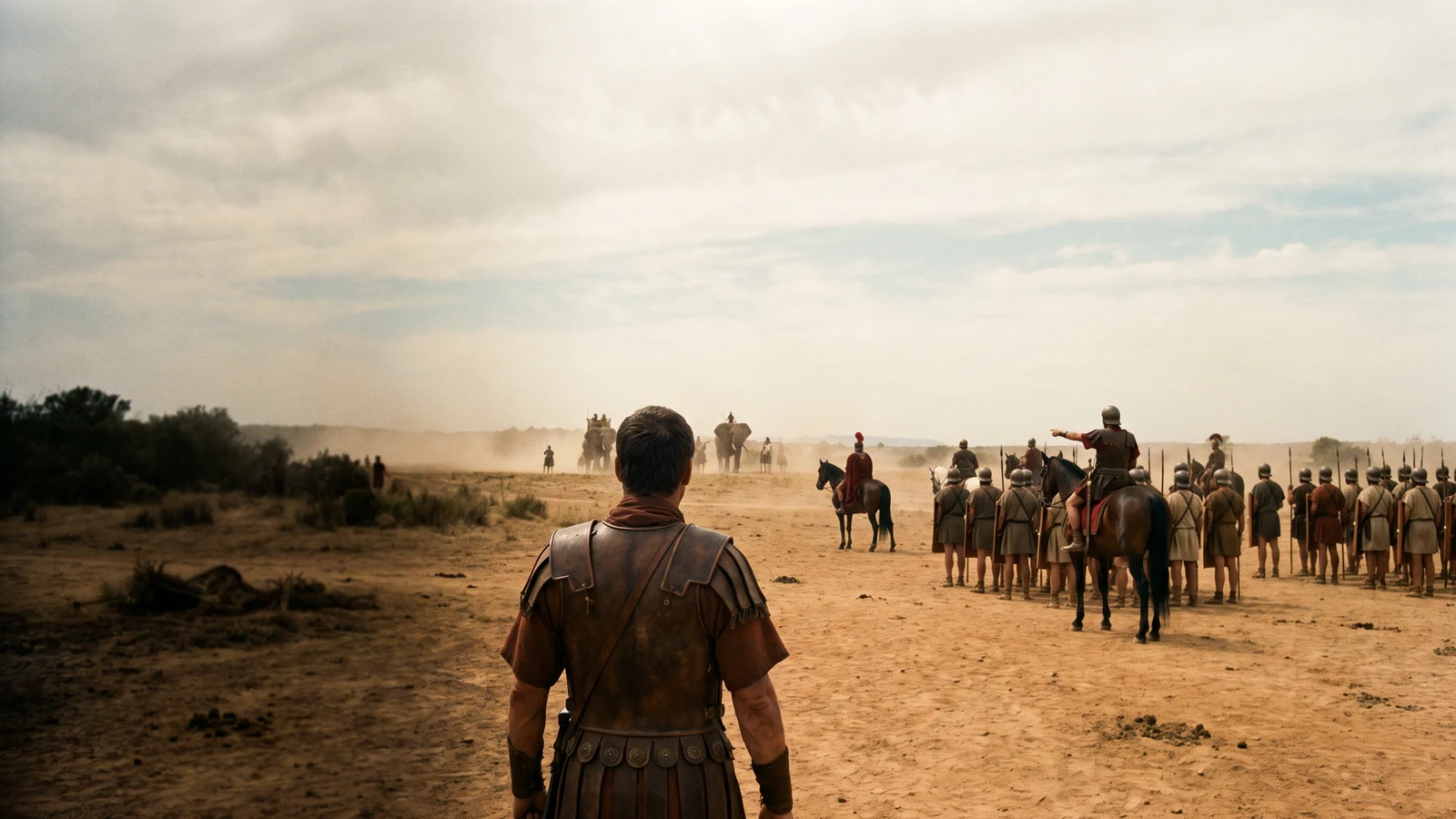
Polybius describes Scipio leaving passages through his infantry formation to help absorb the elephant attack. The battle was not decided by elephants alone: hard fighting continued between the infantry. The cavalry of Masinissa and Laelius returned from pursuit and attacked Hannibal’s troops from behind, turning a difficult contest into a Roman victory.
What Carthage lost after Zama
The peace left Carthage standing, but imposed an indemnity and severe limits on its fleet and military independence. Livy’s summary records the treaty and Scipio’s triumph. The city’s destruction belonged to a different conflict, more than half a century later. Zama changed the balance of Mediterranean power without immediately erasing Carthaginian civic or commercial life. Following the treaty is therefore essential to understanding what victory achieved beyond the battlefield itself.
Questions people ask
Who defeated Hannibal at Zama?
Publius Cornelius Scipio, later known as Africanus, defeated Hannibal with Roman forces and Numidian allies. Masinissa’s cavalry was an essential part of the victory.
Was Carthage destroyed at Zama?
No. Carthage accepted restrictive peace terms after the battle. Roman forces destroyed the city in 146 BC, at the end of the Third Punic War.
Step into The Battle of Zama
Read the approaching battle from Scipio’s position. Open lanes for the elephants, hold through the infantry clash, and exploit the allied cavalry’s return.
This episode is a planned playable documentary. You can explore its narrated opening and make one decision now. The three acts below describe the full story in development. Once completed, it will be free for everyone.
- Open the lanes
- Hold the infantry line
- Exploit the cavalry’s return
Sources and perspective
Ancient accounts reflect their authors’ positions and often disagree. These sources inform the historical summary; dialogue, player roles and imagery in the documentary may be dramatized.
- Polybius · Histories 15.9–19
The principal surviving account of the formations, cavalry action and peace conditions.
- Livy · Periochae 30
A surviving summary of the war’s final campaign, treaty and Roman celebration.
An original historical guide by The Age of Rome. Updated 14 September 2026.